Currently Empty: R0.00

How Solar Energy Is Converted into Electricity
Converting solar energy to electricity is one of the most remarkable advancements in renewable energy. Every day, solar panels capture sunlight and convert it into usable electrical power for homes, businesses, and industries. This clean and sustainable process helps reduce dependence on fossil fuels while lowering electricity costs.
Understanding how solar energy is converted into electricity works allows homeowners and businesses to make informed decisions when investing in solar power systems.
What Is Solar Energy?
Solar energy is the radiant energy emitted by the sun. Every second, the sun releases enormous amounts of energy that travel through space as sunlight.
When sunlight reaches the Earth’s surface, solar panels capture part of this energy and convert it into electricity using photovoltaic (PV) technology.
Unlike fossil fuels, solar energy is renewable, abundant and produces no emissions during electricity generation.
Step 1: Sunlight Reaches the Solar Panels
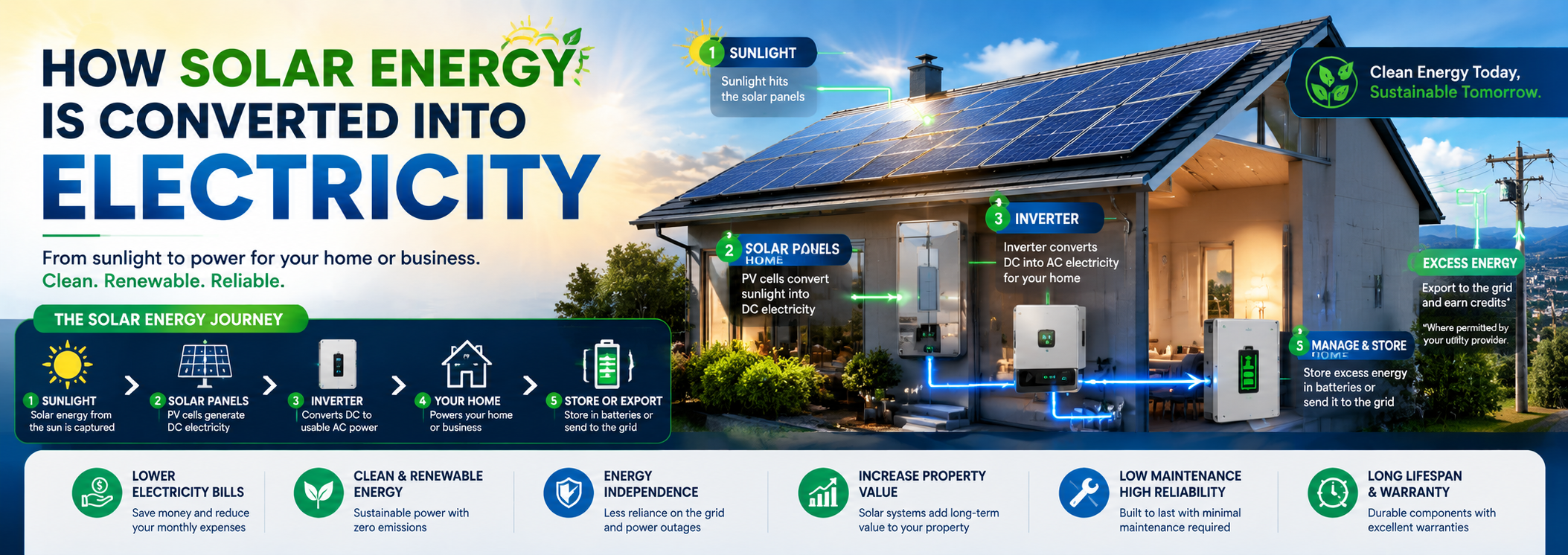
The conversion process begins when sunlight strikes the surface of a solar panel.
Each panel contains multiple photovoltaic cells made primarily from silicon. These cells are specially designed to absorb sunlight efficiently.
The stronger the sunlight, the greater the amount of electricity the panels can produce.
Step 2: Photovoltaic Cells Generate Direct Current (DC)
Inside each photovoltaic cell, sunlight excites electrons within the silicon material.
As these electrons begin to move, they create an electric current known as direct current (DC) electricity.
At this stage, the electricity flows in one direction only and cannot yet power most household appliances.
Step 3: The Inverter Converts DC into AC
Next, the direct current flows from the solar panels to the inverter.
The inverter converts the DC electricity into alternating current (AC) electricity, which is the standard form of power used by homes, businesses and the national electricity grid.
Without an inverter, most electrical appliances would not be able to use the electricity generated by the solar panels.
Step 4: Electricity Powers Your Property
Once converted into AC electricity, the power flows through the electrical distribution board.
From there, it supplies electricity to devices such as the following:
- Lighting
- Refrigerators
- Air conditioners
- Computers
- Pumps
- Industrial machinery
As long as solar production meets demand, these appliances operate using solar-generated electricity instead of grid power.
Step 5: Managing Excess Energy
Sometimes a solar system produces more electricity than the property consumes.
Several options are available for using this extra energy.
Store It in Batteries
Hybrid and off-grid systems can store surplus electricity in lithium batteries for use at night or during power outages.
Export It to the Grid
Some hybrid systems can send excess electricity back to the utility grid where local regulations permit.
This process may allow property owners to receive financial credits or compensation, depending on utility policies.
What Happens at Night?
Solar panels require sunlight to generate electricity.
After sunset, they stop producing power.
However, homeowners and businesses can continue using electricity by:
- Drawing power from battery storage.
- Using electricity supplied by the grid.
- Operating a backup generator if installed.
Hybrid systems automatically manage these power sources to maintain a continuous electricity supply.
What Affects Solar Power Production?
Several factors influence how much electricity a solar system generates.
These include:
Sunlight Intensity
Bright, direct sunlight allows panels to produce more electricity.
Panel Orientation
Correct roof orientation and tilt improve energy production throughout the day.
Shade
Trees, chimneys, and nearby buildings can reduce panel output by blocking sunlight.
Temperature
Although solar panels require sunlight, extremely high temperatures can slightly reduce their efficiency.
Panel Quality
High-quality photovoltaic panels generally deliver better long-term performance and durability.
Benefits of Converting Solar Energy into Electricity
Installing a solar power system offers several important advantages.
These include:
- Lower electricity bills
- Reduced dependence on the utility grid
- Clean renewable energy
- Reduced carbon emissions
- Quiet operation
- Low maintenance requirements
- Long equipment lifespan
- Greater energy independence
As electricity prices continue to rise, solar power becomes an increasingly attractive investment.
Frequently Asked Questions
Do solar panels generate electricity on cloudy days?
Yes. Solar panels continue producing electricity under cloudy conditions, although output is lower than on bright sunny days.
Do solar panels work during load shedding?
Only if the system includes battery storage and an inverter designed to supply backup power during grid outages.
Can solar panels power an entire house?
Yes. A properly designed solar system can supply all or most of a home’s electricity requirements, depending on its size, energy consumption and battery capacity.
Is solar energy environmentally friendly?
Yes. Solar energy produces electricity without burning fossil fuels, making it one of the cleanest renewable energy sources available.
Conclusion
Converting solar energy to electricity is a clean, efficient and reliable way to power homes and businesses. By capturing sunlight with photovoltaic panels and converting it into usable electricity through an inverter, solar systems provide renewable energy that reduces electricity costs and dependence on traditional power sources.
Whether you choose a grid-tied, hybrid or off-grid system, understanding how solar energy becomes electricity is the first step toward making informed decisions about your energy future.